

Last Updated: August 31, 2026
Table of Contents
Introduction
A Korean skincare routine is not just about following a few steps — it is all about layering protection and hydration in right sequence to support your skin surface. This article makes things easier by breaking down the routine into flexible steps based on skin type, tolerance, and climate.
Many people try the most popular 10-step routine only to end up with breakouts/irritation/wasted money. The problem is not just Korean skincare — it is about copying complex routines without knowing your d skin cleanser requirements.
Direct answer: A Korean skincare routine can be as easy as 5 steps: cleanse, tone, treat, moisturize, and protect with best sunscreen.
This Article Belongs to Skincare Routine
What Does Korean Skincare Mean?
Korean skincare generally places a strong emphasis on hydration, prevention, and maintaining a healthy-looking skin barrier rather than relying on quick fixes. The goal is to build a consistent routine that addresses your skin concerns without overwhelming it.
The ingredients you choose also matter. If you prefer skincare products featuring botanical and naturally inspired ingredients, you can learn more about Botanics Skin Care and how different ingredients can fit into a broader skincare routine.
Pro tip: Protect first, perfect later.
The Simplified Korean Skincare Framework
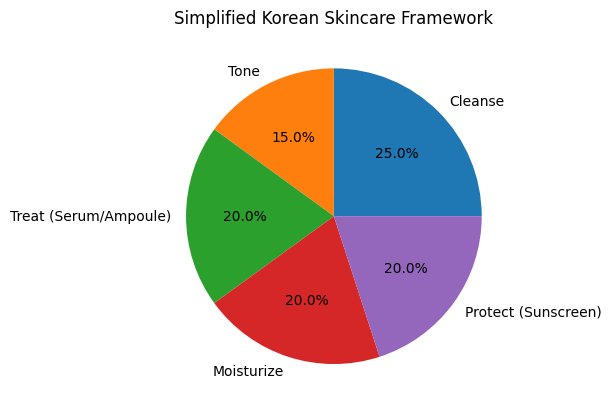
The chart isn’t measuring time or cost—it’s visually communicating how much priority each step has within the overall framework.
-
Cleanse (25%) → The foundation of the routine. Proper cleansing is considered essential for everything else to work effectively.
-
Tone (15%) → Prepares and balances the skin after cleansing.
-
Treat (20%) → Targeted care like serums or ampoules for concerns (acne, pigmentation, aging, etc.).
-
Moisturize (20%) → Maintains hydration and strengthens the skin barrier.
-
Protect (20%) → Sunscreen, which prevents damage and preserves results.
Step-by-Step Routine with Ingredient Understanding
1. Oil Cleanser
- Dissolves excess sebum and sunscreen.
- Particularly useful in polluted urban surroundings.
2. Water-Based Cleanser
- Avoids clogged pores without stripping skin.
3. Toner
- Hydrates; modern toners are not alcohol-heavy.
4. Essence
- Lightweight hydration; signature Korean step.
5. Serums/Ampoules
- Niacinamide → pores & oil control.
- Vitamin C → pigmentation.
6. Moisturizer
- Seals hydration and supports barrier.
7. Sunscreen (Non-Negotiable)
Sunscreen is one of the most important parts of a daytime skincare routine. Regular sun protection can help reduce UV-related skin damage and premature signs of aging.
The American Academy of Dermatology recommends using a broad-spectrum, water-resistant sunscreen with SPF 30 or higher as part of sun protection. Learn more about sunscreen from the American Academy of Dermatology.
- Prevents hyperpigmentation and premature aging.
- Recommended by dermatology authorities worldwide.
| Step | Step Name | AM/PM | Key Notes |
| 1 | Oil-Based Cleanser | PM | Start of the “Double Cleanse” . |
| 2 | Water-Based Cleanser | AM + PM | Completes the “Double Cleanse” . |
| 3 | Exfoliator | PM (2-3x/week) | Skip if skin feels irritated . |
| 4 | Toner | AM + PM | Korean toners are about adding moisture, not stripping. |
| 5 | Essence | AM + PM | The heart of K-beauty often contains fermented ingredients . |
| 6 | Serum/Ampoule | AM + PM | Ampoules are usually thicker and more potent . |
| 7 | Sheet Mask | PM (1-3x/week) | Supplemental treatment is not a daily necessity . |
| 8 | Eye Cream | AM + PM | Apply with the ring finger to avoid tugging . |
| 9 | Moisturizer | AM + PM | Choose texture (gel/cream) based on skin type. |
| 10 | Sunscreen | AM (Last Step) | Non-negotiable in Korean culture: lightweight textures . |
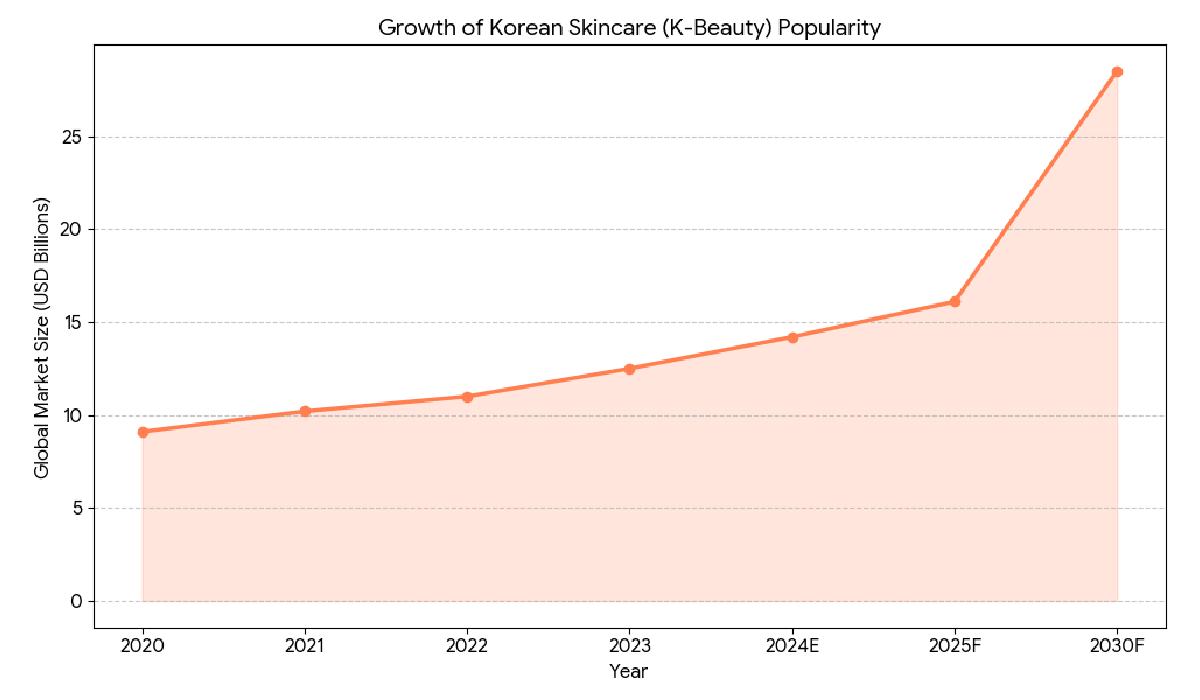
Korean Skincare: Effectiveness vs. Popularity
 Common Mistakes & Skin Barrier Damage
- Using too many actives.
- Exfoliating daily.
- Following influencer routines blindly.
Who Should Avoid Multi-Step Routines?
- Severe acne.
- Rosacea.
- Compromised skin barrier.
Consult a doctor in such cases.
FAQs
1. Do you need 10 steps?
A. 5 well-chosen steps are enough.
2. Is it good for oily skin?
A. Yes, with lightweight layers.
3. Can men follow it?
A. Absolutely — skin needs are universal.
4. How long to see results?
A. Typically 4–8 weeks with consistency.