

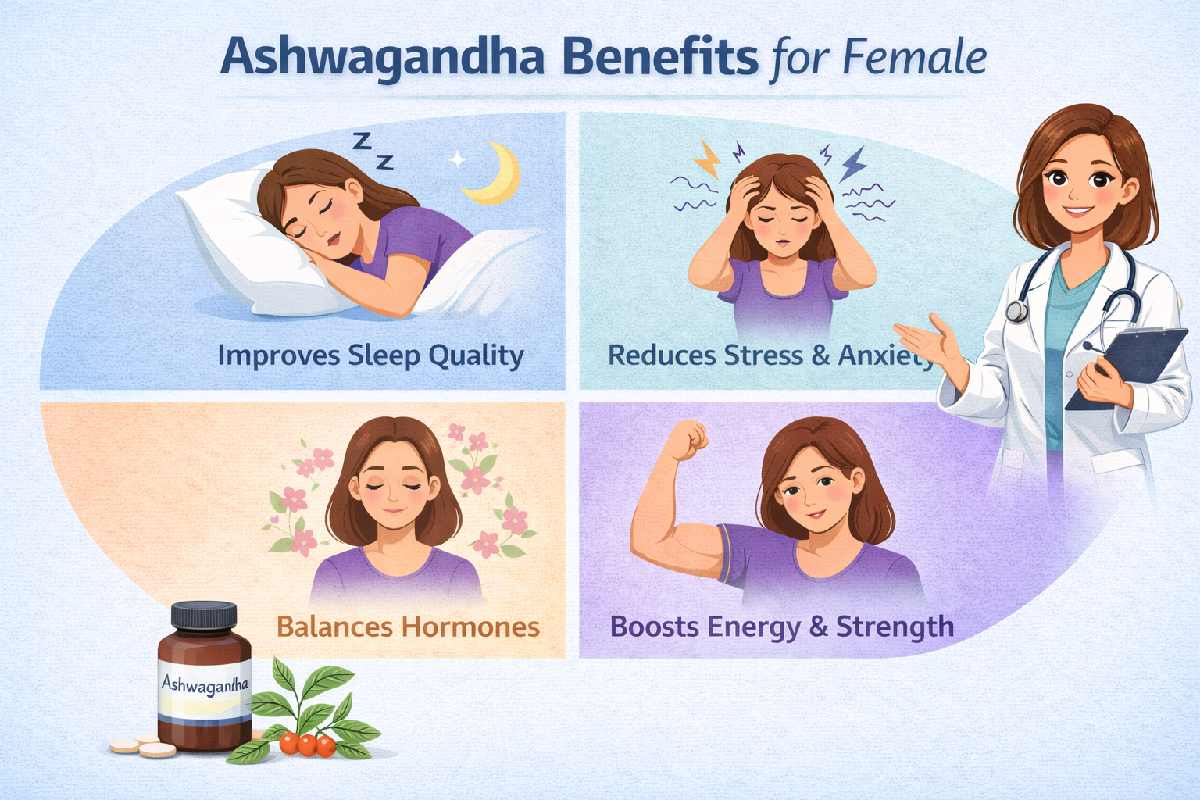
If you’re searching for “ashwagandha benefits for female” health, you’ve discovered one of Ayurveda’s most revered adaptogens. But beyond the trending headlines lies a nuanced, scientifically-supported story of how this ancient herb uniquely supports women’s hormonal health, stress resilience, and vitality across life stages.
As someone who has dedicated years to researching adaptogenic herbs and women’s wellness, I understand that female biochemistry requires specialized consideration. What works for general populations may have different implications for women’s cyclical hormonal patterns. This comprehensive guide separates evidence from hype, providing a balanced, safety-focused perspective on ashwagandha’s potential role in female health optimization.
Table of Contents
What Makes Ashwagandha Particularly Relevant for Women?
Ashwagandha (Withania somnifera), often called “Indian ginseng,” is classified as an adaptogen—a substance that helps the body adapt to stress while promoting homeostasis. For women, who statistically experience higher rates of stress-related disorders and face unique hormonal transitions, a well-researched adaptogen offers distinct advantages.
The Female-Specific Context: Women’s health is intrinsically tied to hormonal balance. Cortisol (the primary stress hormone) directly interacts with reproductive hormones like estrogen, progesterone, and testosterone. Chronic stress can disrupt menstrual cycles, exacerbate perimenopausal symptoms, and impact fertility. Ashwagandha’s cortisol-modulating properties position it as a potentially valuable tool in maintaining this delicate balance.
Evidence-Based Ashwagandha Benefits for Female Health
1. Stress Resilience & Anxiety Reduction
-
The Science: A 2022 randomized controlled trial published in Cureus found that women taking ashwagandha extract (300mg twice daily) showed significantly greater reductions in perceived stress scales compared to placebo. The herb appears to modulate the HPA (hypothalamic-pituitary-adrenal) axis, preventing cortisol dysregulation.
-
Female-Specific Impact: Women are twice as likely to be diagnosed with anxiety disorders. Ashwagandha’s GABA-mimetic properties may offer a gentler alternative or complement to conventional approaches, particularly for stress-related eating patterns and sleep disturbances common in women.
-
Practical Benefit: Enhanced emotional equilibrium during hormonal fluctuations (PMS, perimenopause) and daily stress management.
2. Hormonal Balance & Menstrual Health
-
PCOS Support: Multiple studies highlight ashwagandha’s potential in Polycystic Ovary Syndrome management. Research in the Journal of Ethnopharmacology demonstrated improved insulin sensitivity, reduced testosterone levels, and restored menstrual regularity in women with PCOS.
-
Thyroid Function: For women with subclinical hypothyroidism (disproportionately affecting females), a 2017 study in the Journal of Alternative and Complementary Medicine showed ashwagandha significantly improved TSH, T3, and T4 levels.
-
Cycle Regularity: By modulating cortisol and supporting adrenal function, ashwagandha may help normalize cycles disrupted by stress-induced anovulation.
3. Perimenopausal & Menopausal Symptom Relief
-
The Transition Challenge: Fluctuating hormones during perimenopause create a cascade of symptoms—hot flashes, sleep disruption, mood swings, and anxiety.
-
Ashwagandha’s Role: A 2023 systematic review noted ashwagandha’s potential to reduce the frequency and severity of hot flashes and improve sleep quality in menopausal women, likely through its adaptogenic effects on the neuroendocrine system.
-
Mood & Cognitive Support: Menopausal women often report “brain fog” and emotional volatility. Preliminary research suggests ashwagandha may support cognitive function and emotional stability during this transition.
4. Energy, Vitality & Physical Performance
-
Addressing Female Fatigue: Persistent fatigue unrelated to thyroid issues is a common female complaint. Ashwagandha has demonstrated energy-enhancing properties in clinical settings.
-
Exercise Recovery & Strength: Contrary to misconceptions about women and strength training, a study in the International Journal of Sport Nutrition and Exercise Metabolism found that healthy women taking ashwagandha showed significantly greater improvements in strength, body composition, and recovery compared to placebo.
-
Sexual Health: Research in BioMed Research International indicates ashwagandha may improve female sexual function, particularly arousal, lubrication, and satisfaction—addressing concerns often overlooked in women’s health discussions.
5. Sleep Quality Enhancement
-
The Cortisol-Sleep Connection: Elevated evening cortisol disrupts sleep architecture—a common issue for stressed women.
-
Dual-Action Approach: Ashwagandha helps normalize cortisol rhythms while containing compounds that may promote GABAergic activity, supporting both sleep onset and quality.
-
Practical Application: Particularly valuable for women experiencing perimenopausal insomnia or stress-related sleep disturbances.
Safety Profile & Important Female-Specific Considerations
While generally safe for most women, responsible use requires awareness of these considerations:
Contraindications & Cautions:
-
Pregnancy & Breastfeeding: Avoid use due to limited safety data and potential uterine-stimulating properties.
-
Autoimmune Conditions: Use cautiously or avoid with Hashimoto’s, RA, lupus, or MS, as ashwagandha may stimulate immune activity.
-
Thyroid Medications: Potential interaction—monitor thyroid levels closely and consult your healthcare provider.
-
Sedative Medications: May enhance effects of benzodiazepines or sleep aids.
-
Surgery: Discontinue at least 2 weeks before any scheduled procedure due to potential sedation effects.
Cyclical Considerations:
-
Some women report enhanced benefits when cycling ashwagandha (e.g., 5 days on, 2 days off, or aligning with follicular/luteal phases).
-
Track your response across 2-3 menstrual cycles to identify personalized patterns.
Practical Implementation: How Women Should Take Ashwagandha
Choosing Your Form:
-
KSM-66® or Sensoril®: Standardized extracts with the most clinical research
-
Root Powder: Traditional form, but dosage varies more significantly
-
Capsules vs. Tinctures: Capsules offer precise dosing; tinctures may have faster absorption
Optimal Dosage Guidelines (Based on Research):
-
For stress & anxiety: 250-600mg daily of standardized extract (containing 5-10% withanolides)
-
For hormonal balance: 300-500mg daily, often split into two doses
-
For sleep support: 300-600mg taken 30-60 minutes before bedtime
-
Start Low: Begin with 250mg daily for one week to assess tolerance
Timing Strategies:
-
Morning dose: For daytime stress management and energy
-
Evening dose: For sleep enhancement (avoid if causes vivid dreams)
-
Split dosing: 250mg AM and 250mg PM for all-day adaptogenic support
Synergistic Combinations:
-
For hormonal balance: Pair with vitex (chasteberry) or maca (consult practitioner)
-
For stress adaptation: Combine with rhodiola or magnesium glycinate
-
For adrenal support: Use alongside vitamin C and B-complex
Realistic Expectations & Timeline
Ashwagandha is not an overnight solution but rather a modulator of physiological processes:
-
Week 1-2: Subtle changes in stress response, initial sleep improvements
-
Week 3-6: Noticeable differences in anxiety levels, energy consistency
-
Month 2-3: More significant hormonal balance effects, particularly for cycle regularity or perimenopausal symptoms
-
Long-term: Cumulative benefits in resilience, with many women reporting they “feel like themselves again”
Important: Approximately 10-15% of women may not respond positively or may experience mild side effects (GI discomfort, drowsiness). Discontinuation typically resolves these.
Female-Centric FAQs
Q: Can ashwagandha increase testosterone in women?
A: It can modulate testosterone to healthier levels—lowering it in cases of PCOS-related elevation, and potentially increasing it slightly in women with low levels (often seen in perimenopause), which can support libido and energy.
Q: Should I stop taking it during my period?
A: Not necessarily. Some women continue through their cycle, while others find a brief pause (3-4 days) helpful. Track your symptoms to determine what works for you.
Q: Is it safe for women with estrogen-positive conditions?
A: Current research doesn’t show strong estrogenic activity, but women with history of estrogen-sensitive cancers should consult their oncologist before use.
Q: Can ashwagandha help with postpartum recovery?
A: Only after breastfeeding has concluded. It may then support energy, stress resilience, and hormonal rebalancing.
Q: How does it compare to other adaptogens for women?
A: Ashwagandha is generally more researched for cortisol modulation, while rhodiola excels for mental fatigue, and holy basil for emotional balance. Many women benefit from rotating adaptogens seasonally.
Integrating Ashwagandha into a Holistic Female Wellness Plan
Ashwagandha works best as part of a comprehensive approach:
-
Nutritional Foundation: Ensure adequate protein, healthy fats, and phytonutrients
-
Circadian Alignment: Prioritize consistent sleep-wake cycles
-
Stress Management: Combine with mindfulness, nature exposure, or breathwork
-
Movement: Incorporate both strength training and restorative movement
-
Community: Foster social connections—a critical component of female wellness
The Verdict: Is Ashwagandha Right for You?
For women navigating the complex landscape of modern stress and hormonal health, ashwagandha presents a promising, evidence-supported option with specific benefits for:
-
Women experiencing stress-related symptoms (fatigue, anxiety, poor sleep)
-
Those with PCOS or suboptimal thyroid function
-
Perimenopausal women seeking natural symptom management
-
Active women wanting enhanced recovery and performance
-
Anyone seeking to support their body’s inherent resilience
However, it’s not a panacea. The most profound benefits emerge when ashwagandha is used intentionally alongside lifestyle foundations and under appropriate guidance.
Final Recommendation: Start with a high-quality, standardized extract at a conservative dose. Track your symptoms meticulously for 6-8 weeks. Consult with a knowledgeable healthcare practitioner—preferably one versed in both conventional and integrative medicine—to ensure ashwagandha aligns with your unique health picture and any existing conditions or medications.
Remember: The ultimate goal isn’t just adding a supplement, but cultivating sustainable vitality that honors your body’s innate wisdom and cyclical nature.