

Last Updated: September 3, 2026
If you’re searching for “ashwagandha benefits for female” health, you’ve discovered one of Ayurveda’s most widely used adaptogenic herbs. Beyond the trending headlines, however, the scientific evidence around ashwagandha is more nuanced. Research suggests that standardized ashwagandha extracts may have potential benefits for stress, sleep, and certain aspects of women’s health, but the evidence is still developing.
Ashwagandha (Withania somnifera), sometimes called Indian ginseng, has been used traditionally for centuries. Modern research has investigated its potential effects on stress, anxiety, sleep, physical performance, and other areas of health.
For women, hormonal changes can occur across the menstrual cycle, pregnancy, postpartum period, perimenopause, and menopause. Because these changes are complex, ashwagandha should not be considered a universal “hormone-balancing” solution.
This comprehensive guide separates potential benefits from unsupported claims and provides a balanced, safety-focused perspective.
This Article Belongs to Women’s Wellness
Table of Contents
What Makes Ashwagandha Particularly Relevant for Women?
Ashwagandha is classified as an adaptogenic herb, meaning it has traditionally been used to help the body respond to physical and psychological stress.
Stress can affect sleep, mood, appetite, energy, and menstrual patterns. However, this does not mean that every hormonal problem is caused by stress or that ashwagandha can correct an underlying endocrine disorder.
If you want to understand the broader causes and symptoms associated with hormonal changes, read our guide to hormonal imbalance and its possible causes.
The potential relevance of ashwagandha for women is therefore best understood through specific areas of research rather than the broad claim that it can “balance all hormones.”
Evidence-Based Ashwagandha Benefits for Female Health
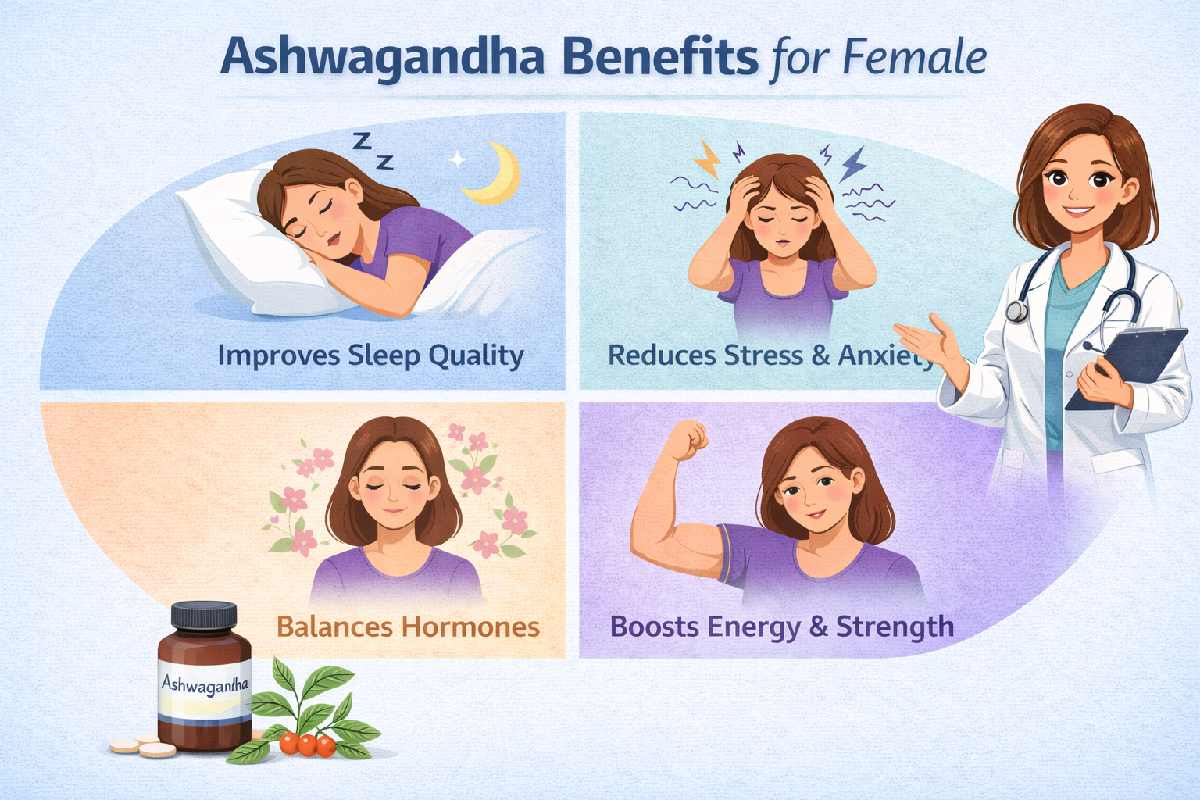
1. Stress Resilience and Anxiety Reduction
Stress is one of the areas where ashwagandha has been studied most extensively.
Some randomized controlled trials have found that standardized ashwagandha extracts may reduce perceived stress and improve certain measures of anxiety compared with placebo.
Researchers believe the herb may influence pathways involved in the body’s stress response, including the hypothalamic-pituitary-adrenal (HPA) axis.
Potential practical benefits may include:
- Better stress management
- Improved subjective well-being
- Reduced feelings of everyday stress
- Potential improvements in sleep associated with stress
However, ashwagandha should not replace professional treatment for an anxiety disorder or other mental-health condition.
2. Hormonal Health and Menstrual Wellness
Women’s reproductive hormones fluctuate naturally throughout the menstrual cycle and across different life stages.
Ashwagandha has been investigated for several aspects of women’s hormonal health, but evidence remains limited for using it as a general treatment for hormonal disorders.
Some research has explored its potential effects on:
- Stress-related menstrual changes
- PCOS-related symptoms
- Thyroid hormone levels
- Reproductive health
- General well-being
Importantly, evidence from studies involving specific conditions should not be interpreted as proof that ashwagandha can treat every type of hormonal imbalance.
Women experiencing persistent irregular or absent periods should first determine the underlying cause.
If your period is delayed, our guide on what to do when your period is delayed provides additional information. A missed period can have many causes, including pregnancy, stress, changes in weight, excessive exercise, PCOS, thyroid disorders, and other medical conditions.
3. Perimenopausal and Menopausal Support
Perimenopause and menopause involve major changes in reproductive hormones and can cause symptoms such as:
- Hot flashes
- Night sweats
- Sleep problems
- Mood changes
- Anxiety
- Changes in sexual function
- Difficulty concentrating
Preliminary clinical research suggests that ashwagandha may help some menopausal women with certain symptoms, particularly stress and sleep-related concerns.
However, research specifically investigating ashwagandha for menopausal symptoms remains relatively limited compared with established medical treatments.
Women experiencing significant menopausal symptoms should discuss treatment options with a healthcare professional.
4. Energy, Strength, and Physical Performance
Ashwagandha has also been investigated in the context of exercise and physical performance.
Some studies suggest standardized extracts may help support:
- Exercise performance
- Muscle strength
- Recovery
- Physical energy
- Body composition when combined with resistance training
These effects should not be interpreted as meaning that ashwagandha directly builds muscle or replaces proper nutrition and exercise.
A consistent resistance-training program, adequate protein intake, sufficient calories, and good recovery remain the foundations of improving strength and body composition.
5. Sleep Quality
Sleep is another area where ashwagandha has attracted scientific interest.
Some research suggests that supplementation may modestly improve sleep quality and sleep onset, particularly among people experiencing stress-related sleep problems.
This may be particularly relevant for women experiencing sleep disruption during stressful periods or hormonal transitions.
Nevertheless, persistent insomnia should be evaluated rather than treated solely with supplements.
What Does the Research Actually Say?
The evidence for ashwagandha is promising in several areas, but it is not equally strong for every claimed benefit.
The National Center for Complementary and Integrative Health (NCCIH) notes that studies have investigated ashwagandha for stress, anxiety, sleep, and other health outcomes, while also emphasizing that more research is needed to determine how effective and safe it is for different uses.
You can review the NCCIH overview of ashwagandha for additional evidence and safety information.
This distinction is important because supplement marketing often makes broader claims than the clinical evidence supports.
Safety Profile and Important Female-Specific Considerations
Although short-term studies suggest that ashwagandha is generally tolerated by many adults, it is not appropriate for everyone.
Pregnancy
Ashwagandha should generally be avoided during pregnancy because there are insufficient safety data and concerns about potential effects on pregnancy.
Breastfeeding
There is not enough reliable evidence to establish its safety during breastfeeding. Women who are breastfeeding should speak with a healthcare professional before using it.
Thyroid Conditions
Ashwagandha may affect thyroid hormone levels. Women with thyroid disease or those taking thyroid medication should consult their healthcare provider before supplementation.
Autoimmune Conditions
Because ashwagandha may influence immune activity, people with autoimmune disorders should discuss its use with a healthcare professional.
Medications
Ashwagandha may interact with certain medications, including some:
- Sedatives
- Medications affecting blood sugar
- Medications affecting blood pressure
- Thyroid medications
- Immunosuppressive medications
Always check with a qualified healthcare professional if you take prescription medications.
Liver Concerns
Rare cases of liver injury have been reported in association with ashwagandha supplements. Stop using the product and seek medical attention if symptoms such as jaundice, unusually dark urine, severe nausea, or abdominal discomfort occur.
Surgery
Because of potential sedative and other effects, people preparing for surgery should discuss ashwagandha use with their healthcare team.
Should Women Cycle Ashwagandha?
There is currently no strong clinical evidence establishing that women need to cycle ashwagandha according to menstrual phases.
Some supplement programs recommend schedules such as taking it for five days and stopping for two days, or changing the dose according to the menstrual cycle. These approaches are not well established by clinical research.
Rather than following an arbitrary cycling schedule, consider the specific product, dose, duration, and reason for use with a healthcare professional.
How Should Women Take Ashwagandha?
There is no single dose that is appropriate for every woman.
Clinical trials have used different preparations, extract concentrations, and dosages. Therefore, comparing milligram amounts between products can be misleading because two products containing the same amount of extract may have different concentrations of active compounds.
Choosing a Product
Look for products that clearly identify:
- The plant species
- The part of the plant used
- Extract concentration
- Standardization information
- Suggested serving size
- Independent quality testing when available
Standardized root extracts are commonly used in clinical research.
Timing
Some people prefer taking ashwagandha with food to reduce the possibility of stomach discomfort.
If it causes drowsiness, an evening dose may be more convenient. If it does not affect alertness, some people prefer taking it earlier in the day.
There is no universally proven “best time” to take ashwagandha.
Possible Side Effects
Reported side effects are generally mild in short-term studies but can include:
- Stomach discomfort
- Nausea
- Loose stools
- Drowsiness
- Headache
If symptoms are persistent or severe, discontinue use and consult a healthcare professional.
How Long Does Ashwagandha Take to Work?
There is no guaranteed timeline.
Some studies have reported changes in stress or sleep measures after several weeks of supplementation. However, individual responses can vary considerably.
Avoid assuming that increasing the dose will produce faster results.
A sensible approach is to evaluate whether the supplement is actually helping after an appropriate period while monitoring for side effects.
Female-Centric FAQs
Can Ashwagandha Increase Testosterone in Women?
Some research has reported changes in testosterone or other reproductive hormones in particular populations, but the evidence is not strong enough to recommend ashwagandha specifically for increasing or decreasing testosterone in women.
Women with symptoms of androgen excess should be evaluated for potential causes such as PCOS or other endocrine conditions rather than attempting to regulate testosterone with supplements.
Should I Stop Taking Ashwagandha During My Period?
There is no established medical requirement to stop taking ashwagandha during menstruation.
If you experience unwanted symptoms while taking it, discuss whether continuing, changing the dose, or discontinuing the supplement is appropriate.
Is Ashwagandha Safe for Women With Estrogen-Sensitive Conditions?
Evidence is insufficient to establish its safety for women with estrogen-sensitive cancers or other hormone-sensitive conditions.
Women with a history of breast, ovarian, uterine, or other hormone-sensitive cancers should consult their treating healthcare professional before using ashwagandha.
Can Ashwagandha Help With Postpartum Recovery?
Evidence for postpartum use is limited, particularly during breastfeeding.
Women who are pregnant, recently postpartum, or breastfeeding should speak with their healthcare provider before taking ashwagandha.
Can Ashwagandha Help With PCOS?
Some preliminary research has investigated ashwagandha and PCOS-related outcomes, but it should not be considered an established treatment for PCOS.
PCOS management may involve nutrition, physical activity, weight management when appropriate, medications, and treatment of specific symptoms.
Integrating Ashwagandha Into a Holistic Female Wellness Plan
Ashwagandha should be considered a potential supplement—not the foundation of women’s health.
A stronger wellness strategy includes:
- Balanced Nutrition: Eat adequate protein, fiber, fruits, vegetables, and healthy fats.
- Regular Movement: Combine resistance training with cardiovascular activity and everyday movement.
- Quality Sleep: Maintain a consistent sleep schedule and aim for adequate sleep.
- Stress Management: Use sustainable strategies such as mindfulness, relaxation, social connection, or professional support.
- Preventive Healthcare: Attend appropriate health screenings and discuss persistent symptoms with healthcare professionals.
- Individualized Supplementation: Use supplements based on evidence, personal needs, and safety considerations.
The Verdict: Is Ashwagandha Right for You?
For some women, ashwagandha may provide modest benefits related to stress, sleep, and possibly certain aspects of physical performance or well-being.
The strongest takeaway is that ashwagandha should not be marketed as a cure-all or universal hormone-balancing supplement.
It may be worth discussing with a healthcare professional if you are interested in using it for:
- Stress-related symptoms
- Sleep difficulties
- General well-being
- Exercise recovery
- Certain menopause-related concerns
However, women with thyroid disorders, autoimmune diseases, pregnancy, breastfeeding, liver concerns, hormone-sensitive conditions, or medication use should seek professional advice before supplementation.
Final Recommendation
If you decide to try ashwagandha, choose a reputable product with transparent labeling and follow the manufacturer’s recommended serving unless your healthcare professional advises otherwise.
Monitor how you feel, watch for side effects, and don’t use the supplement as a replacement for appropriate diagnosis or treatment.
The ultimate goal isn’t simply to add another supplement to your routine. It’s to build sustainable habits that support sleep, nutrition, movement, stress management, and overall health.
Ashwagandha may have a role in female wellness, but informed use matters more than exaggerated promises.